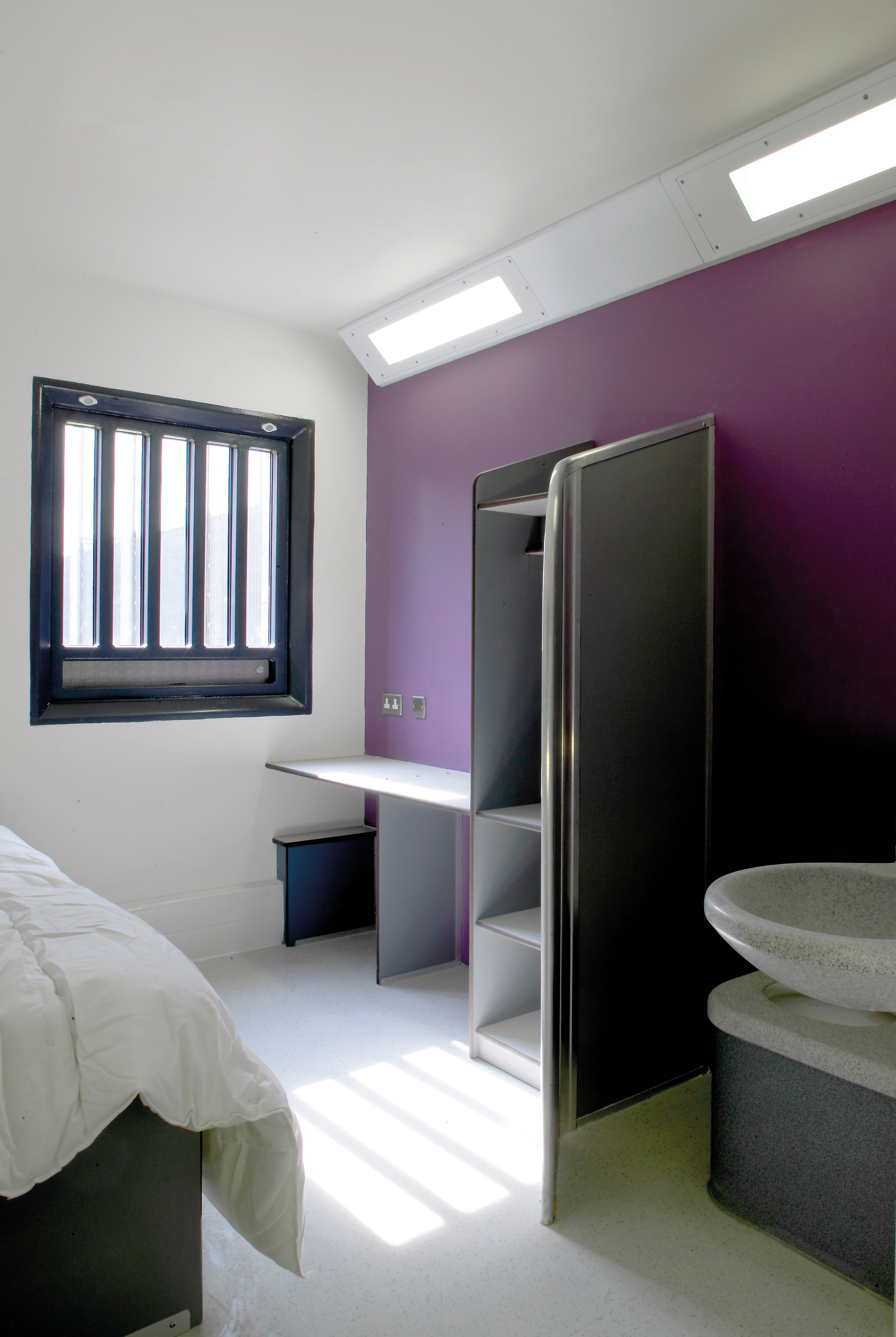
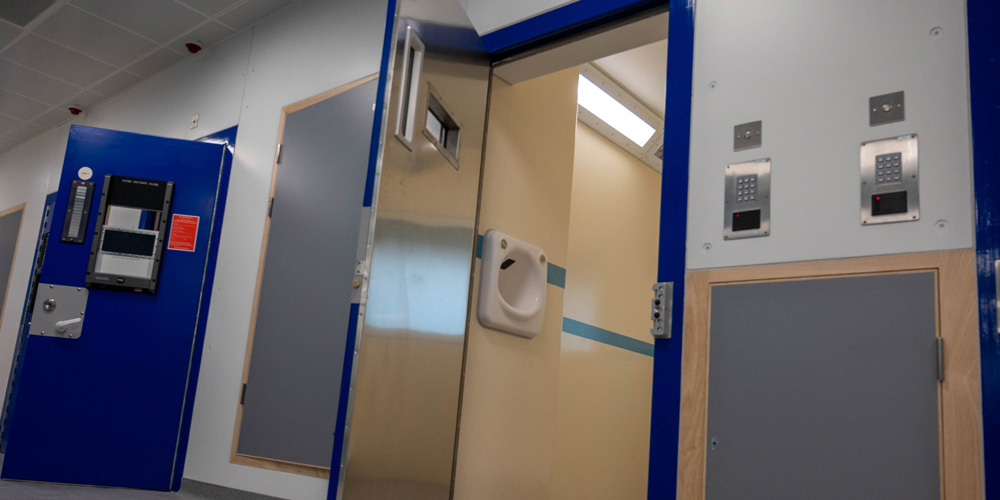
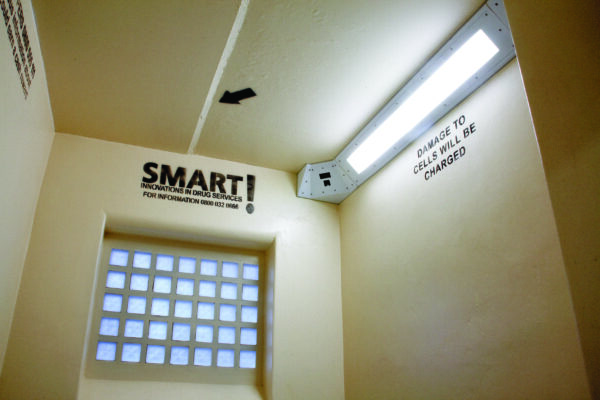
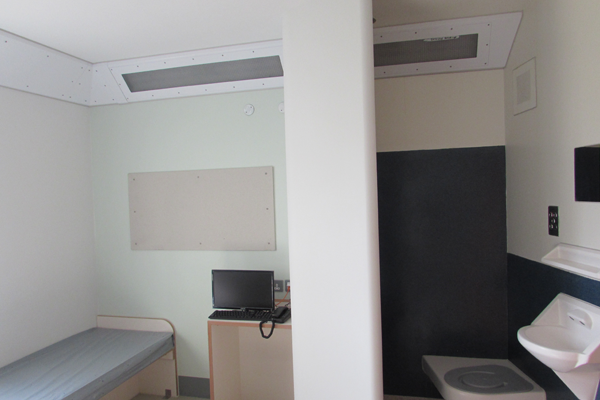
Custodial lighting must deliver extreme robustness, tamper resistance, and ligature‑resistant form factors. As a result, these characteristics protect both staff and occupants while ensuring reliable day‑to‑day operation.
Compared to lighting in commercial buildings, custodial luminaires need to be much stronger and far more secure. Because of this, several design factors become essential. In particular, impact resistance, tamper resistance, and ligature‑resistant form factors play a major role.
Extremely Robust
EN 62262 defines impact ratings up to IK11 (50 joules), but custodial settings demand more. That’s why we test our luminaires up to IK20 (250 joules), offering five times the impact resistance of standard IK11 fittings. Because of this, the luminaires can resist vandalism, intentional tampering, and attempts to create ligature points.
Tamper-Resistant Construction
In secure environments, prisoners may attempt to dismantle or interfere with lighting. To prevent this, custodial luminaires must incorporate:
- Tamper‑proof screws and minimal gaps between diffuser and body
- Compatibility with hard‑setting (anti‑pick) mastic, as referenced in ETN 023 and MoJ mastic list 000000‑MOJ‑0054‑XX‑T‑K‑8111
- Flame‑resistant diffusers engineered to handle naked flame, abrasion from a 10mm coach bolt, and heavy impact
Together, these features reduce the chance of hiding contraband or using the fitting for escape attempts. In addition, they help the luminaire stay safe and reliable over time.
Ligature Resistance Profiles
MoJ standards for ligature‑resistant cells require luminaires that actively reduce self‑harm risks. To achieve this, fittings must include:
- Smooth, uninterrupted external profiles
- Minimal apertures
- Products tested and granted formal LIG ratings
- Verified compliance through burns and abrasion testing
As a result, these designs remove opportunities for ligature attachment.