Skip to content

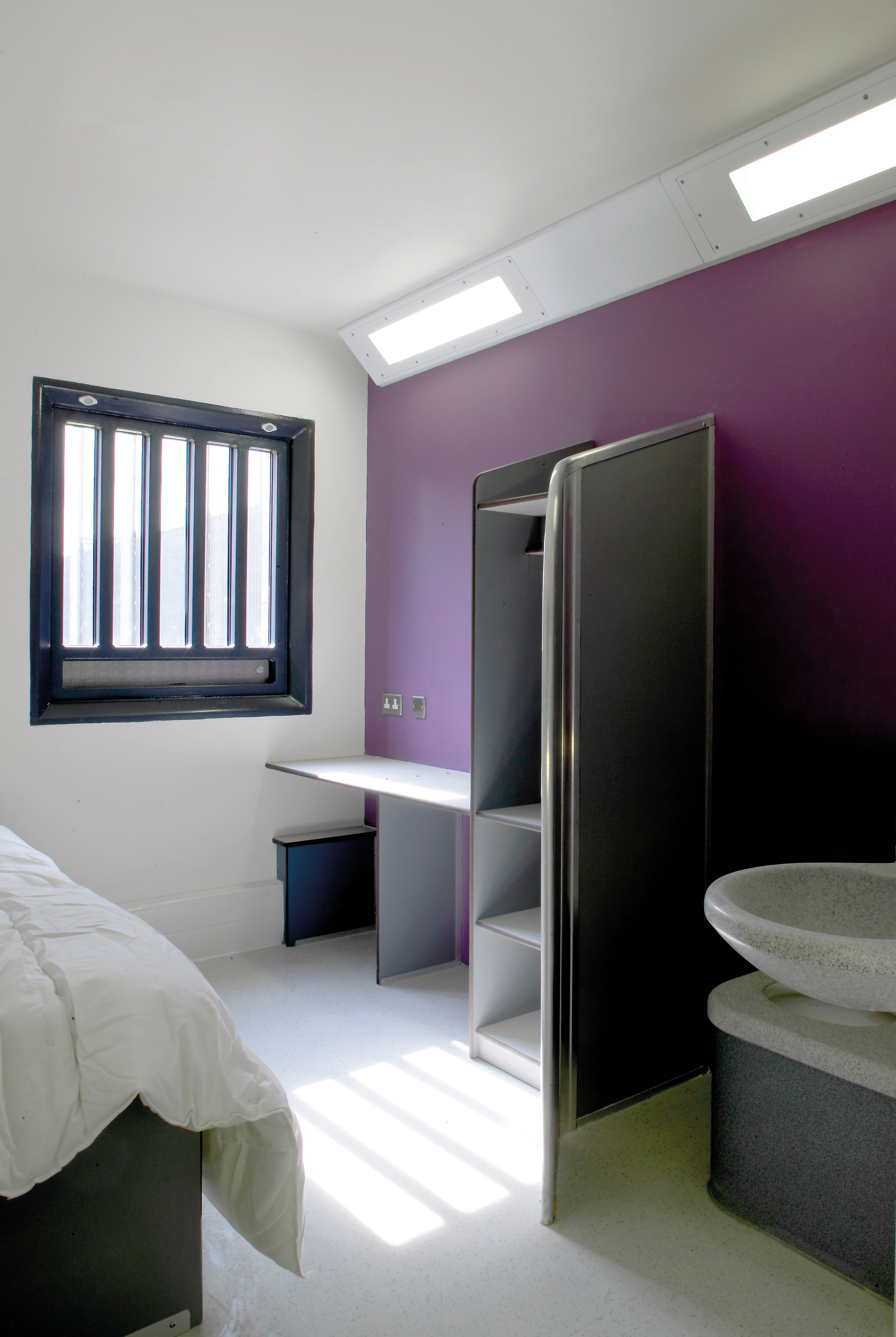
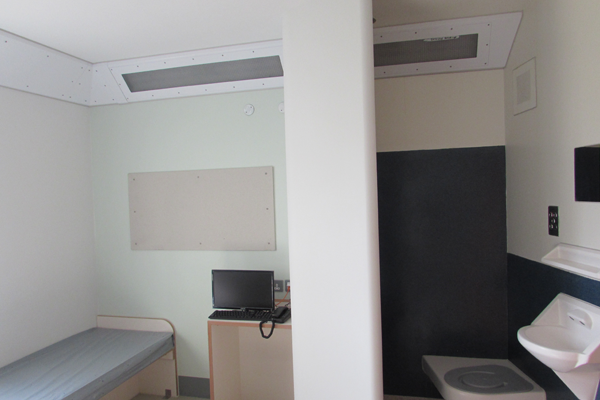
Custodial cells are among the most demanding spaces for lighting. Prisoners may be unsupervised for extended periods, so every luminaire must be engineered for safety, resilience and long‑term reliability.

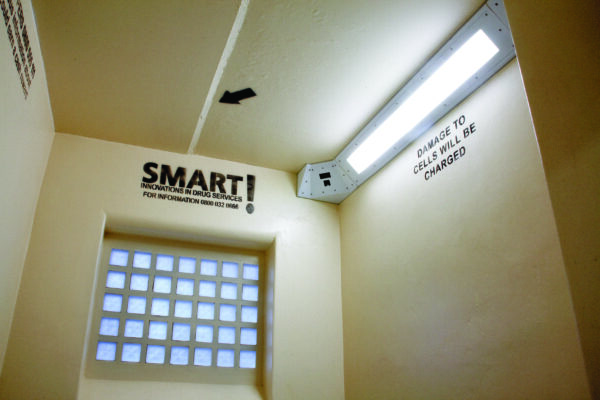
At Designplan, we develop ligature‑resistant and tamper‑resistant luminaires specifically for police custody suites and prison estates, tested for high impact resistance and built to reduce points of attachment. Our ranges are aligned to current MoJ requirements for reduced ligature and ligature‑resistant cells and are designed to minimise operational disruption with long‑life LED systems and maintainable gear trays.

Custodial Lighting, Prison Lighting

Lighting Custodial Environments: Safety by Design

Custodial lighting must combine extreme robustness, tamper resistance, and ligature‑resistant form factors to protect occupants and staff while supporting reliable operations.

Unlike typical commercial environments, custodial settings require lighting that is:

Extremely Robust
EN 62262 standards dictate impact ratings up to IK11 (50 joules), but custodial environments require far greater resilience. Our luminaires are tested up to IK20 (250 joules), providing five times the impact resistance of standard IK11 fittings. This ensures resistance to vandalism, tampering attempts, and efforts to create ligature points.

Tamper-Resistant Construction
Prisoners may attempt to dismantle or access luminaires. To mitigate this, fittings must incorporate:

  • Tamper‑proof screws and minimal gaps between diffuser and body.
  • Designed for installation with hard‑setting (anti‑pick) mastic (referenced in ETN 023 and MoJ mastic list 000000‑MOJ‑0054‑XX‑T‑K‑8111).
  • Flame‑resistant diffusers engineered to withstand naked flame, abrasion from a 10mm coach bolt and impact.

These measures prevent fixtures from being used to hide contraband or facilitate escape.

Ligature Resistance Profiles

MoJ ligature-resistant cell standards require luminaires that actively reduce the risk of self-harm. This is achieved through:

  • Smooth external geometries with minimal apertures.
  • Products tested and attributed formal LIG ratings
  • Proven compliance via burns and abrasion testing

Understanding MoJ Custodial Cell Terminology & Specs

  • Reduced ligature (previously standard cells)
  • Ligature‑resistant (previously safer cells)
  • Spec 22 (STD/E/SPEC/022) remains a critical reference point, cited in STD 71, STD 80 and multiple MoJ design guide sections.
  • Spec 21 (STD/E/SPEC/021) is now less commonly used following updates and a shift to ligature‑resistant expectations.

Reducing Operational Disruption

Maintenance in custodial facilities is challenging, as cells should not be taken out of operational use for extended periods. To minimise disruption, our custodial luminaires feature:

This reduces downtime, improves safety, and lowers long-term operational costs.

Designed for Safety. Engineered for Longevity.

Designplan has led the custodial lighting sector since 1963, continually evolving to meet the demands of custodial facilities.

Our custodial luminaires deliver:

These qualities ensure safer environments for both staff and prisoners, while supporting reliable, long-term operation.

Technical Support

The MoJ have a stringent set of standards for prison cell design and certification. Reduced ligature cells are governed by STD/E/SPEC/021 and “Ligature-resistant cells” by STD/E/SPEC/022. Both contain the requirement for prison lighting above the IK ratings detailed in EN 60068-2-75. Our luminaires are rated up to IK20, which is an impact equivalent to 250 joules of energy – 5 times more than an IK11 rated fitting (50 joules).

In “Ligature-resistant cell” applications, MoJ standards state that “the luminaires must be designed so as to reduce the potential for a prisoner to attach a ligature in order to attempt suicide”. We achieve this by minimising the aperture between the luminaire’s diffuser and body, using tamper proof screws and designing the body to be suitable for the application of anti-pick mastic during installation. A burns test is also required for “Ligature-resistant cell” accreditation. A naked flame, and abrasion from a 10mm coach bolt, is applied for up to 8 minutes to ensure the diffuser can’t be punctured.

FAQs

What makes custodial cell lighting different?

Custodial environments require luminaires that are far more robust than typical commercial fittings. Standard IK11 ratings allow resistance up to 50 joules, but custodial cells demand significantly higher impact resistance, up to 250 joules, five times stronger than IK11. This ensures the lighting can withstand vandalism, tampering, and attempted breaches

What is anti-ligature lighting?

Anti Ligature Lighting (now known as Ligature resistant lighting) is designed to reduce the risk of self harm or suicide by eliminating points where a ligature could be attached. Our fittings are tested to minimise these risks in challenging environments, like custodial cells.

Why does custodial lighting require higher impact ratings?

In custodial cells, prisoners are often unsupervised for long periods. Luminaires must withstand extreme deliberate force or vandalism. For this reason, Designplan test fittings up to 250 Joules, which is equivalent to IK20 performance, far greater than the IK11 limit defined on the standard IK scale.

Why is maintenance such a challenge in custodial environments?

Maintenance requires moving prisoners from cell to cell, or block to block, creating risks and operational disruption.
To address this, custodial luminaires incorporate removeable gear trays, enabling quick upgrades or repairs, reducing downtime, and improving safety for staff and inmates.

Why are LED gear tray upgrades important in prison environments?

LED upgrades reduce energy use, extend product lifespan, and minimise the need for disruptive maintenance visits. However, light distribution must match original specifications to ensure continued compliance with MoJ emergency lighting requirements.

Best Practice Lighting Guide

Our lighting guide highlights common custodial applications, emphasising principles of effective lighting. We explore the advantages of sturdy construction, adherence to standards, and tailored design needs, such as anti-ligature luminaires for “safer” cell usage. Download your copy by clicking the button below.

You can also connect with us on LinkedIn and Instagram for ongoing updates.

;