Skip to content

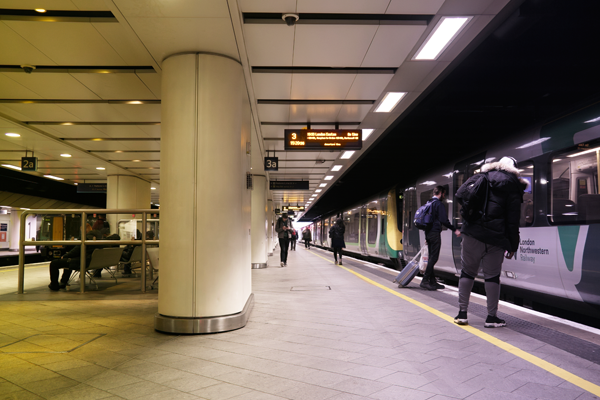
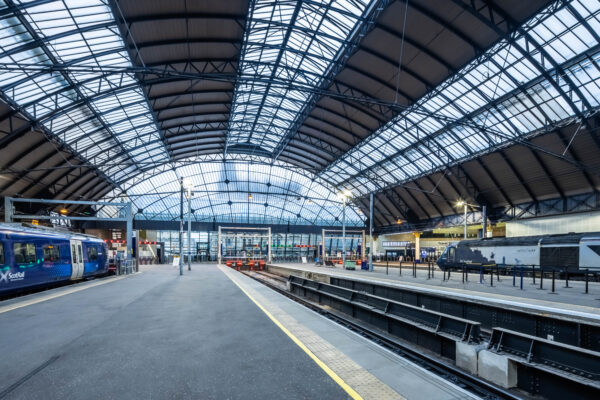
Lighting levels and uniformity on covered train platforms are critical to passenger safety and operational efficiency. Whether a platform is completely empty or experiencing a sudden rush hour surge, every object, surface, and potential hazard must remain perfectly visible.

Achieving this balance requires an intentional approach to railway station platform lighting, one that considers the unique architecture of covered canopies, driver visibility, and long-term durability.

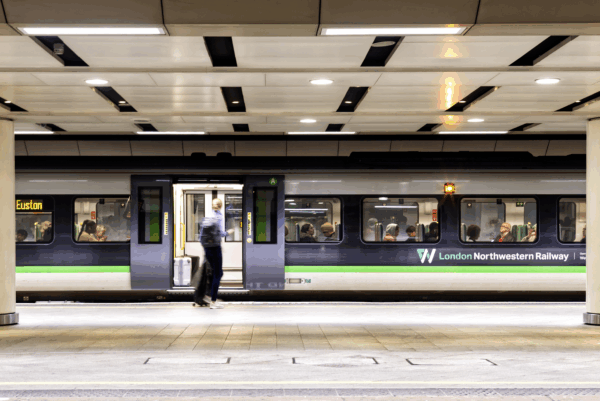
Transport Lighting, Train Platform Lighting

The Core Challenges of Covered Platform Lighting

Designing an effective lighting scheme for a covered rail environment involves balancing several competing demands:

  • Navigating Dense Crowds: While it may be tempting to space light fixtures widely to minimise upfront costs, platforms experience sudden flurries of intense passenger activity. The lighting design must account for fully occupied spaces where bodies can block wide light throws.
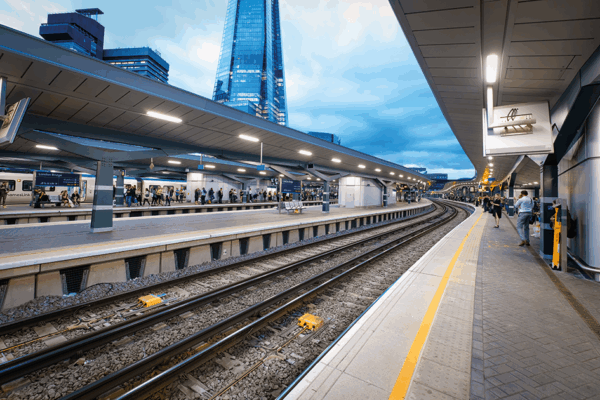
  • Securing the Platform Edge: Signage and platform edges must be sharply defined. This requires perfectly balancing horizontal illuminance (light falling on the floor) and vertical illuminance (light illuminating faces and standing objects) while keeping glare to an absolute minimum.
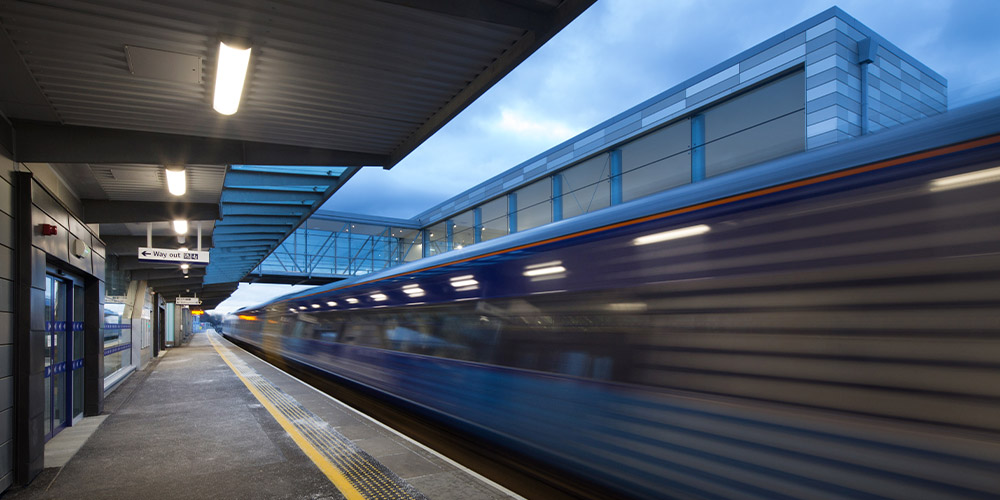
  • Protecting Train Driver Visibility: Drivers require a completely clear field of vision to accurately process visual signals as they enter and exit covered platforms. Poorly positioned or overly bright fittings can cause blinding glare, creating severe safety risks.
  • Withstanding Public Spaces: Because platform lighting is often accessible to the public, fixtures need much higher impact resistance than standard commercial lights to survive accidental damage or deliberate vandalism.

Best Practices for Canopy & Platform Lighting

Optimise Spacing with Lower-Output Fixtures

To combat the shadow effect caused by crowded platforms, we recommend using lower-output luminaires spaced closer together. This configuration distributes light more evenly throughout the entire volume of the space.

Additionally, directing a portion of light onto the vertical structure of the canopy significantly raises the perceived brightness of the station. This makes the environment feel safer, more open, and welcoming to passengers.

Ensure Vandal and Impact Resistance

Robust construction is non-negotiable for transport infrastructure. Installing high-IK rated, vandal-resistant linear luminaires ensures that your lighting network remains fully operational, reducing maintenance cycles and lowering the total cost of ownership.

Technical Support

Several standards have specific information on the interface between platforms, track and trains. This includes RIS-7702-INS Iss1 Rail Industry Standard for Lighting at Stations which refers to BS EN 12464-2:2014 and Railway Group Standard GI/RT7016 Issue Five Dated March 2014. These standards may take account of the likely numbers of passengers when setting lighting requirements.

When lighting a covered platform we would recommend 30 -100 lux average on the platform surface with a uniformity of 0.4 as per DFT Design Standards for Accessible Railway Stations. The illuminance range is dependent on usage and accessibility of the platform as per BS EN 12464-2. The platform edge requires a 20 lux minimum with 0.4 uniformity, which is in line with RIS-7702- INS standards. Where CCTV is used the design of the scheme and positioning of fittings must avoid conflict.

For further lighting advice speak to our technical sales team on 020 8254 2022 or e-mail technicalsales@designplan.co.uk

Best Practice Lighting Guide

Our lighting guide identifies typical overground rail applications. We examine the benefits of robust construction and lighting controls to reduce your cost of ownership and carbon footprint. To download your copy click on the button below.

Our comprehensive Overground Rail Lighting Guide examines the benefits of robust construction and intelligent lighting controls to help you drastically reduce your station’s carbon footprint and operational costs.

railway lighting, platform lighting

You can also connect with us on LinkedIn for ongoing updates.

;