Skip to content

Understanding IP ratings is essential when specifying lighting and electrical equipment for different environments. An IP rating (Ingress Protection rating) defines how well a product is protected against dust and water, based on the international BS EN 60529 standard.

Whether you’re designing for transport, healthcare, custodial or public environments, selecting the correct IP rating ensures long-term durability, safety, and compliance.

This guide provides a complete overview and links to more detailed resources across our site.

What is an Ingress Protection Rating?

An Ingress Protection rating is a classification used to define the level of protection an enclosure provides against:

  • Solid objects (dust, debris, particles)
  • Liquids (water, moisture, washdowns)

It is expressed as two digits:

  • First digit (0–6): Protection against solids
  • Second digit (0–9K): Protection against liquids

For a deeper technical breakdown aligned to BS EN 60529

How the IP Rating System Works

Protection Against Solids (First Digit)

  • 0 – No protection
  • 4 – Protection against objects >1mm
  • 5 – Dust-protected
  • 6 – Dust-tight

Protection Against Water (Second Digit)

  • 0 – No protection
  • 4 – Splashing water
  • 5 – Water jets
  • 7 – Temporary immersion
  • 8 – Continuous immersion
  • 9K – High-pressure, high-temperature jets

Both digits must be considered together. Strong dust protection does not compensate for poor water resistance.

IP Ratings for Different Environments

Choosing the correct Ingress Protection rating depends on where the product is installed.

Indoor Environments

  • Typically require IP20–IP44
  • Used in dry or low-risk areas

Bathrooms & Wet Areas

  • Usually require IP44 or higher
  • Dependent on zoning

Outdoor Applications

  • Require IP65 or higher
  • Must withstand rain, dust, and environmental exposure

Industrial & Harsh Environments

  • Typically require IP67+
  • Exposure to washdowns, debris, and high-pressure cleaning

Common IP Ratings and What They Mean

IP44

  • Protection from solid objects >1mm
  • Resistant to splashing water
  • Suitable for indoor or sheltered environments

IP54

  • Limited dust protection
  • Resistant to water spray

IP65

  • Dust-tight
  • Protected against water jets
  • Ideal for outdoor lighting applications

IP67

  • Dust-tight
  • Protected against immersion up to 1 metre

IP69

  • Dust-tight
  • Protected against close-range high pressure, high-temperature spray downs

Learn more about applications in our upcoming guide to IP ratings for outdoor lighting

IP Ratings for Different Environments

Choosing the correct Ingress Protection rating depends on where the product is installed.

Indoor Environments

  • Typically require IP20–IP44
  • Used in dry or low-risk areas

Bathrooms & Wet Areas

  • Usually require IP44 or higher
  • Dependent on zoning

Outdoor Applications

  • Require IP65 or higher
  • Must withstand rain, dust, and environmental exposure

Industrial & Harsh Environments

  • Typically require IP67+
  • Exposure to washdowns, debris, and high-pressure cleaning

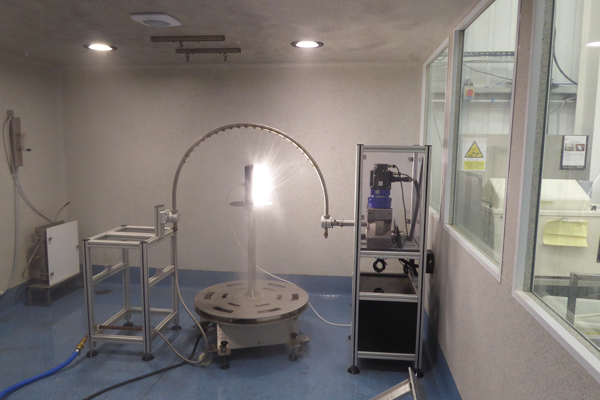
How IP Ratings Are Tested (Designplan Expertise)

At Designplan, Ingress Protection performance is verified through in-house laboratory testing.

Testing includes:

This ensures every luminaire performs reliably in real-world conditions and meets the required IP classification.

How to Choose the Right IP Rating

Selecting the correct Ingress Protection rating depends on:

  • Environment: Indoor, outdoor, industrial
  • Exposure: Dust, splashes, washdowns, immersion
  • Application: Fixed installation or portable

Quick Guide

Environment Recommended IP
Indoor dry areas IP20–IP44
Bathrooms IP44–IP65
Outdoor lighting IP54-IP65
Harsh Environments IP69-IP69K

Choosing the right level avoids under-specification (risk of failure) and over-specification (unnecessary cost).

FAQs About IP Ratings

What is an IP rating?

A standard that defines protection against dust and water.

Is IP65 waterproof?

IP65 protects against water jets, but not immersion.

What IP rating is suitable for outdoor use?

Typically IP54 or higher.

Is a higher IP rating always better?

No — the correct rating depends on the environment and application.

Conclusion

IP ratings are critical for ensuring durability, safety, and performance. By understanding how they work and selecting the appropriate level of protection, you can ensure reliable operation across any environment.

You can also connect with us on LinkedIn and Instagram for ongoing updates.

;