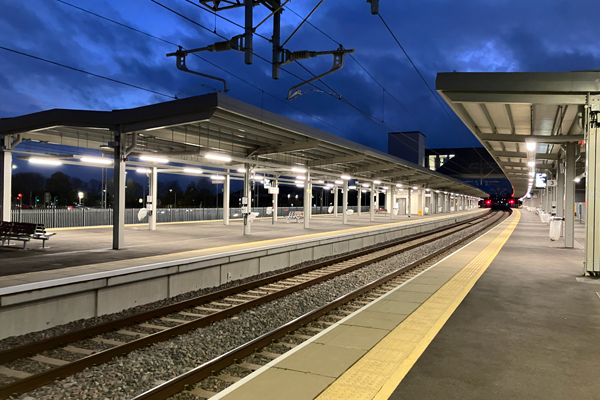
Network Rail manages one of the most complex infrastructure estates in Britain. Specifically, this includes more than 2,500 stations, thousands of trackside buildings, and millions of individual assets. Because of this massive scale, relying strictly on reactive, like-for-like maintenance is no longer financially viable. Therefore, the network requires a disciplined, long-term plan to govern both routine upkeep and major renewals.
The 4S Framework and Minimum Viable Product (MVP) is Network Rail’s response, aligned to its seven-year control period. Ultimately, this strategy shifts the focus away from short-term fixes. Instead, it prioritizes decisions based on the whole-life cost of an asset.
For a detailed breakdown, you can review these guiding principles in the official Network Rail Design Manual: NR-GN-CIV-200-08 (Lighting Design in Stations).
Furthermore, the RSSB (Rail Safety and Standards Board) has updated RIS-7702 (Lighting for Stations) to strictly account for glare and light spill to protect train drivers and passengers. Combined, these updated standards are fundamentally transforming how lighting and controls are specified across the UK rail network.